

Why ESGTree? – Differences that Make a Difference
Differences that Make a Difference: What distinguishes ESGTree from its competitors. Over the past four years, one of the most common questions we get is: What differentiates ESGTree from
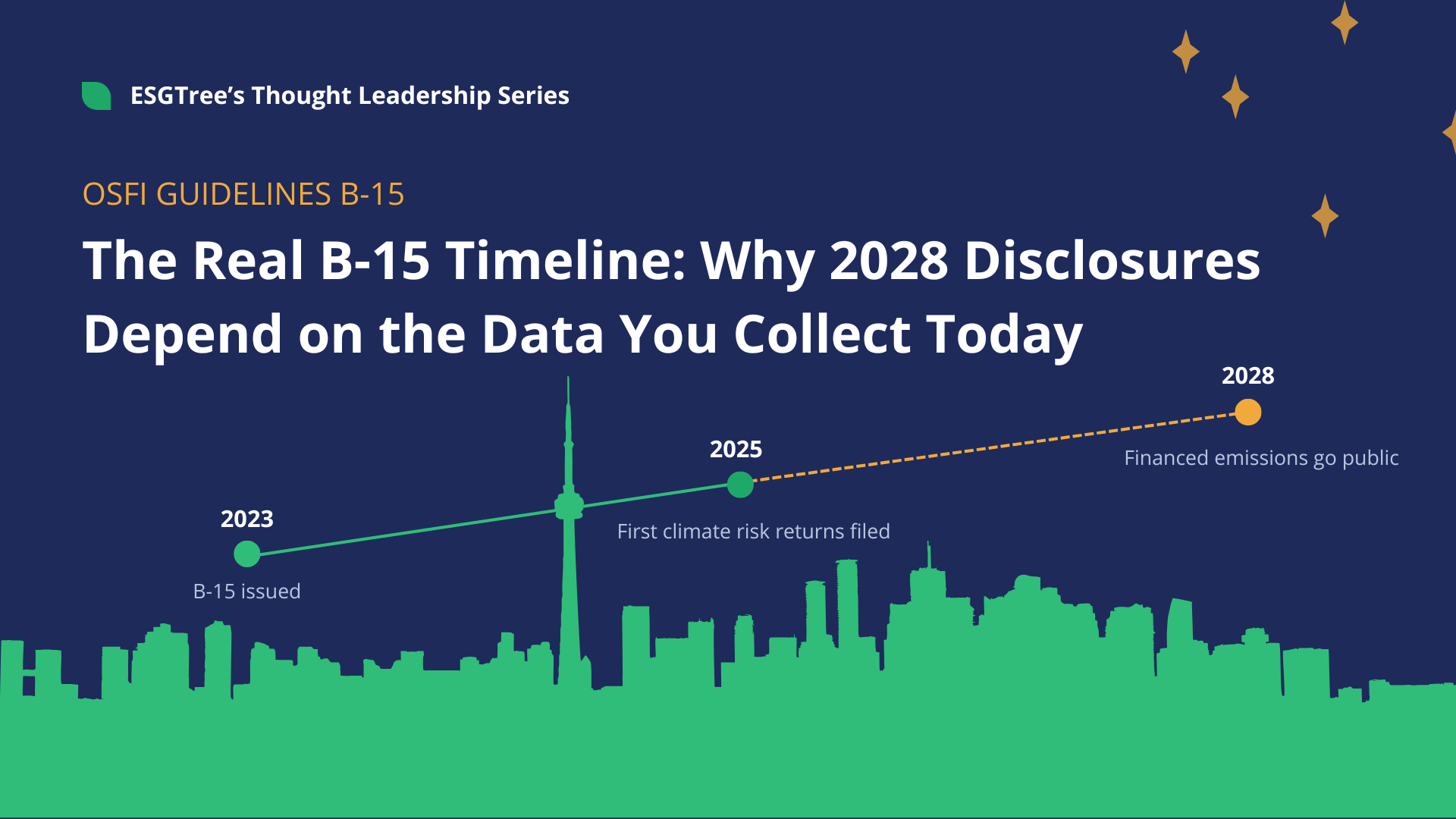
This article outlines what OSFI Guideline B-15 Are and what they require, the timeline institutions face, and where compliance programs encounter the greatest difficulty.
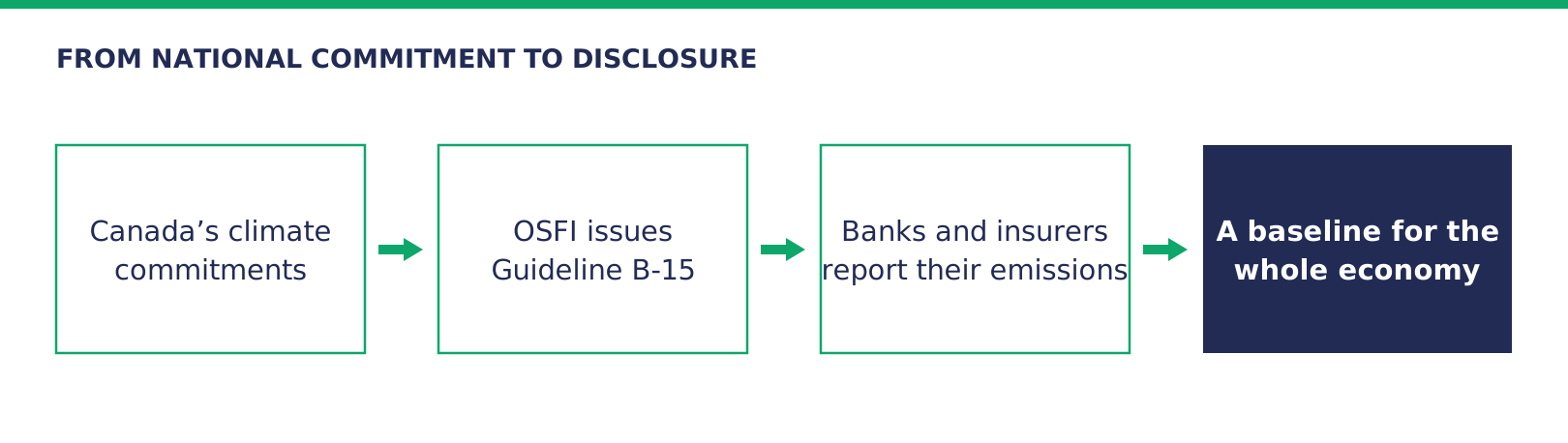
Canada accounts for roughly 1.5 per cent of the world’s greenhouse gas emissions. It has committed to reducing its own emissions by 40 to 45 per cent below 2005 levels by 2030, and to reaching net zero by 2050. Meeting these commitments requires regulation, and the most consequential regulation for Canadian finance is Guideline B-15, issued by the Office of the Superintendent of Financial Institutions, or OSFI, the federal body that supervises Canada’s banks and insurers. First published in 2023 and updated in March 2025, B-15 applies to every federally regulated financial institution in the country.
Under B-15, institutions must report their exposure to climate-related risk and their greenhouse gas emissions. The requirement covers not only the emissions of an institution’s own operations, which represent a small share of its overall footprint, but also the emissions of everything it finances: the companies it lends to and the assets it invests in. This second category, known as financed emissions, accounts for most of the financial institution’s climate impact. For the first time, the emissions financed by Canada’s financial system are being measured and reported to a regulator, and beginning in 2028 they will be publicly disclosed. The result is data that has never been collected at this scale, and a baseline of where the Canadian economy stands today.
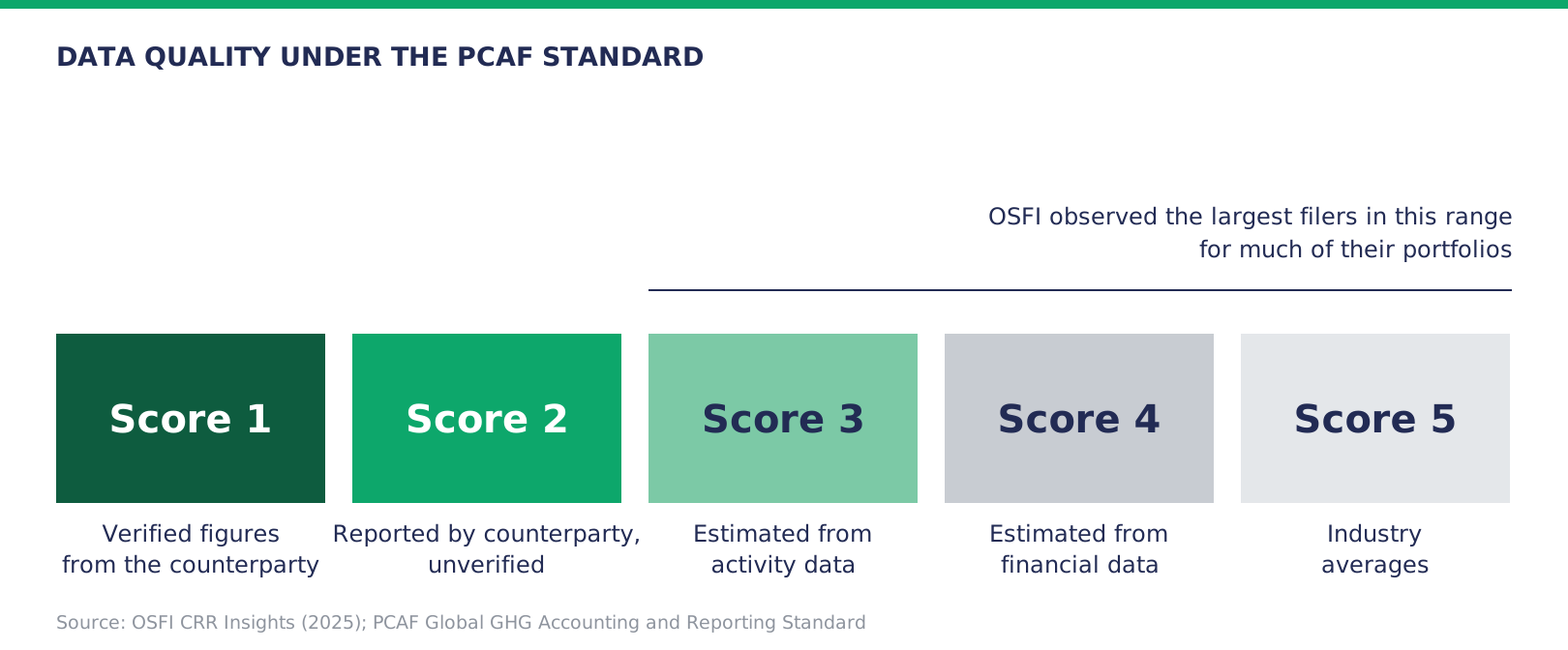
In 2025, Canada’s largest banks and insurers filed their first mandatory Climate Risk Returns under B-15, and the initial submissions confirmed the scale of what is being measured: the six largest banks alone reported approximately 301 million tonnes of financed emissions. Financed emissions are measured under the Partnership for Carbon Accounting Financials, or PCAF, an international standard that grades every figure by the reliability of its source. At the top of the scale are verified figures reported directly by the counterparty, meaning the borrower or investee itself. At the bottom are estimates derived from industry averages. OSFI’s review of the first submissions found that even the largest filers, institutions with dedicated climate teams and years of preparation, relied on estimates for significant portions of their portfolios. The submissions also revealed more basic issues, including incomplete fields, altered reporting templates and outdated reference data.
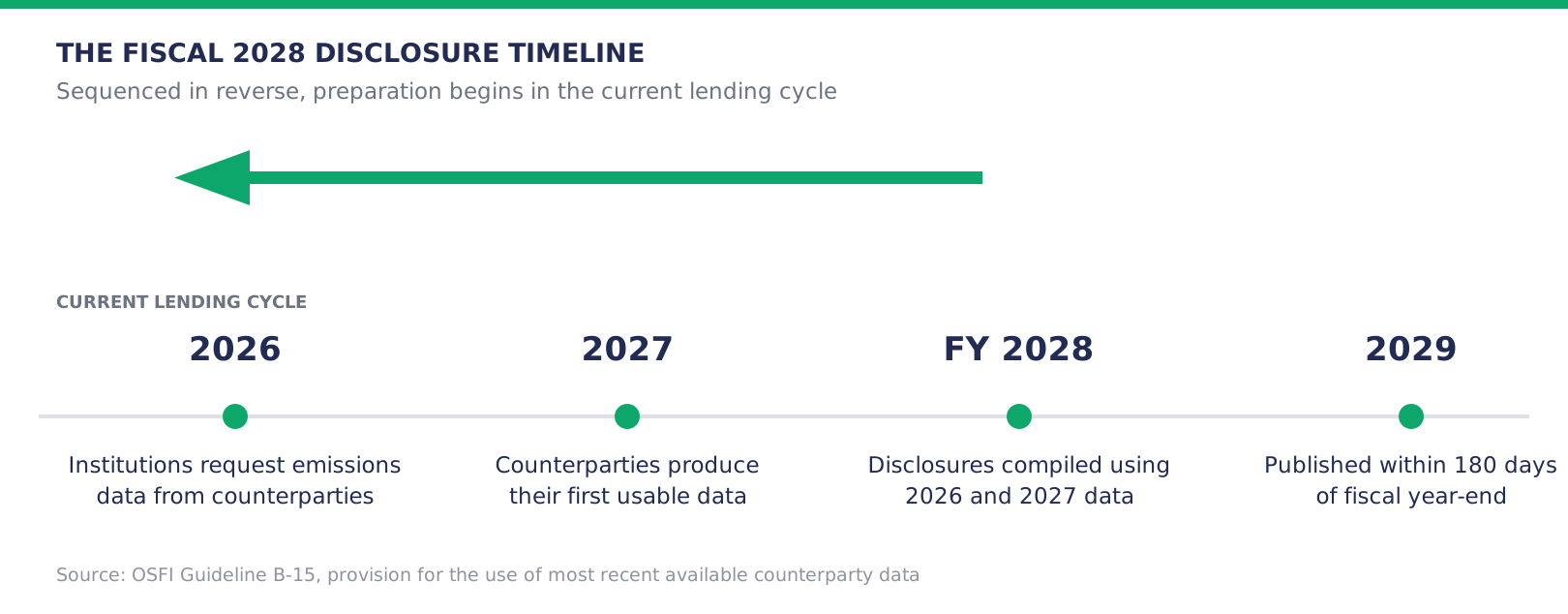
B-15 phases in by thresholds. Smaller and mid-sized institutions entered the reporting regime a year after the largest, beginning with governance and the emissions of their own operations. The most demanding obligation applies to all in-scope institutions at the same time: by fiscal year 2028, every federally regulated financial institution must publicly disclose its financed emissions, within 180 days of its fiscal year-end. The deadline was originally 2025. OSFI moved it to 2028 to align with Canada’s new sustainability disclosure standards, and was explicit that the additional time is intended for building measurement capability, not for deferring the work.
The effective timeline is shorter than the fiscal 2028 date suggests. Counterparty emissions disclosures are normally published after the reporting period has ended, which means the data often becomes available one to two years after the period it describes. B-15 accounts for this by permitting institutions to use the most recent data available.
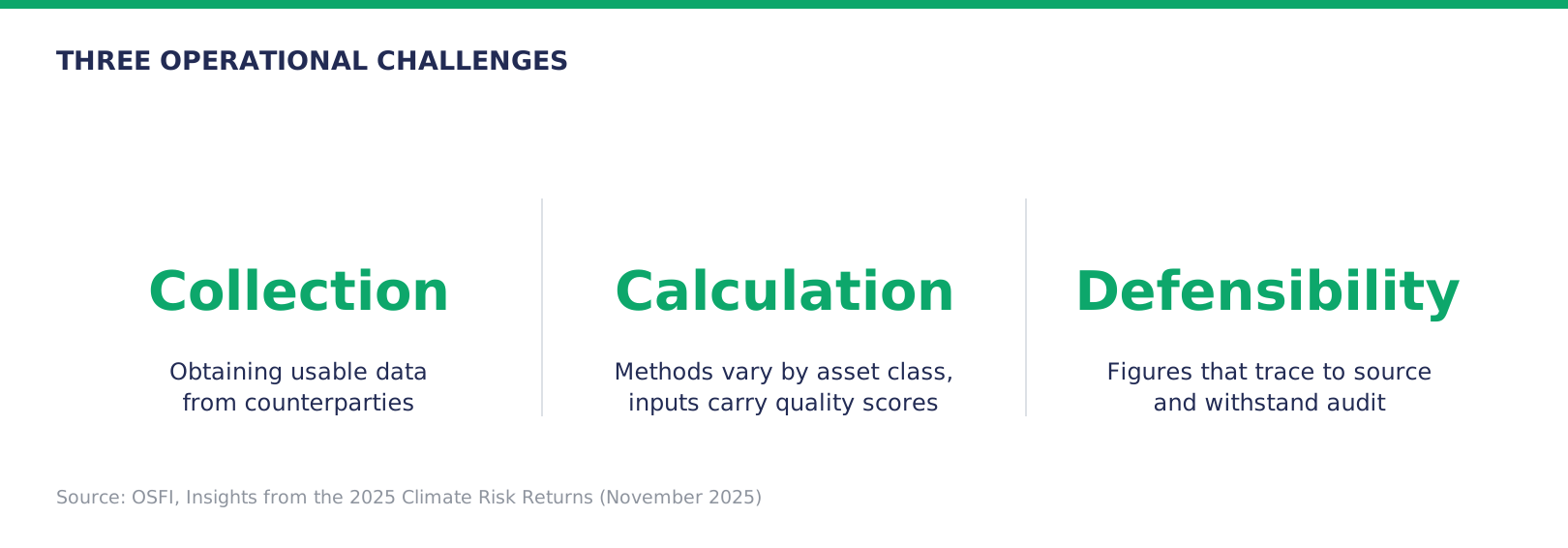
The experience of the first filers points to three areas where compliance programs encounter difficulty.
ESGTree is a leading ESG and emissions data management and reporting platform. Its PCAF-compliant carbon accounting engines cover all major asset classes, with integrated data quality scoring, full provenance tracking, counterparty data collection workflows and automated anomaly detection. For Canadian institutions preparing for 2028, ESGTree provides the calculation and audit trail infrastructure required to produce disclosures that withstand regulatory and audit scrutiny.
To discuss what your institution needs for 2028: info@esgtree.com




For those seeking a streamlined approach, ESGTree’s advanced carbon calculator can handle all calculations for both your institution and your portfolio. Reach out to us to learn more!
Canada: ESGTree, CPA 4th Floor, 140 West mount Rd N, Waterloo,
ON N2L 3G6, Canada
United Kingdom: ESGTree, 33 Queen Street, London EC4R 1AP, United Kingdom